
2026 / 05 / 28 Ernie Mota
What to actually track from your ad spend
Ad platforms love showing you big numbers. Impressions in the tens of thousands. Reach charts pointing up. None of it tells you whether the ads are paying for themselves.
Here is the short list we actually track, and what each number is for.
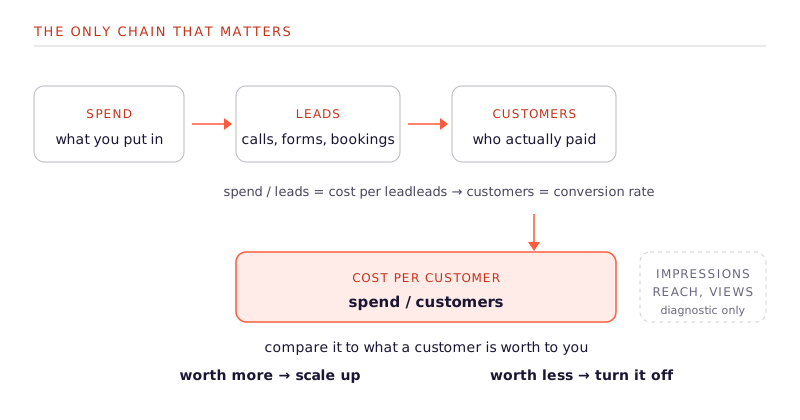
Cost per lead
Total spend divided by real inquiries: calls, form fills, booking requests. This is the number that matters most. If a platform brags about clicks but cannot show you leads, the money is decorating a chart somewhere.
A useful cost per lead depends on what a customer is worth to you. A $40 lead is terrible for a sandwich shop and phenomenal for a roofer.
Lead-to-customer rate
Of the people who called, how many became paying customers? Ads can only bring people to the door. If leads come in but do not convert, the problem is usually the follow-up speed or the offer, not the ad. Track it so you fix the right thing.
Cost per customer
Multiply the two numbers above and you get the only figure worth judging a campaign by: what it costs to win one paying customer. Compare it to what that customer spends. Now you know, mathematically, whether to scale the ads up or turn them off.
One honest weekly glance
That is the whole dashboard: spend, leads, cost per lead, new customers, cost per customer. Five numbers, one row per week. Anyone in the business can read it in ten seconds.
| Number | Question it answers | What a bad reading means |
|---|---|---|
| Spend | What did we put in? | Nothing on its own. It is the denominator for everything below |
| Leads | How many real inquiries came back? | Clicks without calls means the ad is working and the landing page is not |
| Cost per lead | What does one inquiry cost? | Only "bad" relative to what a customer is worth. $40 is terrible for a sandwich shop and phenomenal for a roofer |
| New customers | How many leads actually paid? | Leads that never close point at follow-up speed or the offer, not the ad |
| Cost per customer | What does one paying customer cost? | Higher than what that customer spends means stop, whatever the other four say |
Print it, tape it up, fill one row every Monday. A campaign that cannot fill this table is not being measured, whatever the platform dashboard is showing you.
Everything else the platforms report, impressions, engagement rate, video views, is diagnostic detail. Useful when something breaks, noise when it has not. Judge campaigns by what they cost to win a customer, and every budget conversation gets easier.