
2026 / 07 / 04 Ernie Mota
How to Increase Car Count (and How to Tell When ARO Is the Real Problem)
To increase car count, make your shop easier to find and easier to pick: a complete Google Business Profile, a steady flow of fresh reviews, and real follow-up with the people who already know you. But before you spend a dollar on any of that, make sure car count is actually what's wrong.
Every marketing pitch a shop owner gets promises the same thing: more cars. More calls, more bookings, more cars through the door. And plenty of shops sign up for that without asking the question that should come first:
Do I actually have a car count problem?
Because a lot of shops don't. A lot of shops have an ARO problem wearing a car count costume, and buying more cars for a shop with a low average repair order is like pouring water into a bucket you haven't patched. You'll be busier, your techs will be buried, your bays will be full, and your deposit at the end of the month will look weirdly the same.
Two numbers, two completely different problems
Car count is how many vehicles you write repair orders for in a period. It's a demand problem. If it's low, not enough people are choosing you.
ARO, average repair order, is your total sales divided by that count. It's a capture problem. If it's low, people are choosing you, and you're leaving money on every ticket: inspections not happening, findings not presented, declined work not followed up, or you're attracting oil-change customers to a shop built for diagnostics.
Marketing can move both. But the campaigns look nothing alike, which is why "we'll get you more cars" is a red flag when it's the opening line instead of the conclusion.
| Car count | ARO | |
|---|---|---|
| What it is | Vehicles you write repair orders for in a period | Total sales divided by that count |
| What kind of problem | Demand. Not enough people are choosing you | Capture. People are choosing you |
| What low looks like | Bays sitting open, techs under capacity | Full bays, thin tickets, deposit stays flat |
| Where the fix lives | Outside the building: visibility, reputation, reach | Inside the building: inspection, presentation, follow-up |
| What marketing does | Brings more cars | Changes which cars, which sets the ceiling |
How to tell which one you have
You don't need software for this, just last quarter's numbers and ten honest minutes.
Take your average daily car count and divide it by your number of bays. For a reference point, PartsTech surveyed 752 general repair shops for its 2025 report and reported: "On average, shops service 2.2 vehicles per bay per day." That's an average, not a target, and your mix moves it a lot. But if your bays sit open half the day and your techs are waiting on work, you have a demand problem. Marketing for car count is the right call.
Now take your ARO. There's no universal "good" number, so compare it against your own history and against shops doing the same kind of work in your market. If your tickets run thin next to that, and your bays are reasonably full, more cars is not your answer. Your answer is inside the building: inspection process, presentation, follow-up on declined work. A shop with every bay full and thin tickets doesn't need a Facebook campaign. It needs a digital vehicle inspection habit and a service advisor who presents findings on every single car.
And here's where it gets interesting for marketing: the kind of customer you attract sets your ARO ceiling before the car ever hits the lift. A $49 AC-check coupon fills your schedule with people who want $49 problems. A page on your site that clearly explains your diagnostic process, what a real AC system evaluation involves, and why the desert eats compressors attracts a customer who's already braced for a real repair. Same ad spend. Wildly different ticket.
How to increase car count, once you know it's the problem
Open bays, techs waiting, healthy tickets? Then yes, go get cars. Start with the cheap, close-to-home stuff before you pay anyone for ads:
- Fix your Google Business Profile. Right primary category, secondary categories for the work you actually want (brakes, AC, diagnostics), accurate hours, a full services list, real photos. It's what people see before your website, and most shops have it half done. Here's the five-minute version.
- Ask for reviews every day, not in bursts. Make it part of pickup, or a text that goes out when the invoice closes. A steady trickle of recent reviews beats a pile from two years ago.
- Work your declined-work list. Every declined recommendation is a customer who already trusts you with a problem you already found. A follow-up call or text a few weeks later gets back a car that was already halfway in the door.
- Win back lapsed customers. Pull everyone who hasn't been in for a year or more from your shop management system and reach out. They know where you are. They just need a reason.
- Turn on service reminders. Oil, brakes, fluids, whatever the vehicle history says is coming due. If your software can send them and nobody switched it on, switch it on.
- Go after fleet and commercial accounts. Contractors, landscapers, property managers, delivery vans. Fleets bring repeat cars on a schedule, and they don't take the slow season off.
- Publish for the season you're in. Demand follows the weather. In the Coachella Valley that means AC and cooling-system work all summer. Wherever your shop is, put up the page about the problem your customers are about to have, before they have it.
- Show up in AI answers. Some drivers now ask ChatGPT or Google's AI results to recommend a mechanic, and those answers are built from your profile, your reviews, and what your site says. How that works for repair shops.
Paid ads can sit on top of all this. They just work a lot better once the listing, the reviews, and the follow-up are already doing their jobs. For the full order, and what each step costs, see auto repair shop marketing: what to do first.
What this means when someone pitches you
When Brenro looks at a shop, the first conversation isn't about keywords. It's about bays, techs, car count, ARO, and mix, because those numbers decide what the marketing should even try to do:
- Empty bays, healthy ARO → visibility campaign. Go get cars.
- Full bays, thin ARO → don't buy cars. Fix capture first, then market for better cars: diag work, fleet accounts, European, whatever your shop is actually built for.
- Full bays, healthy ARO → you don't need more marketing, you need a waiting list and maybe a price increase. (Yes, agencies are allowed to say that.)
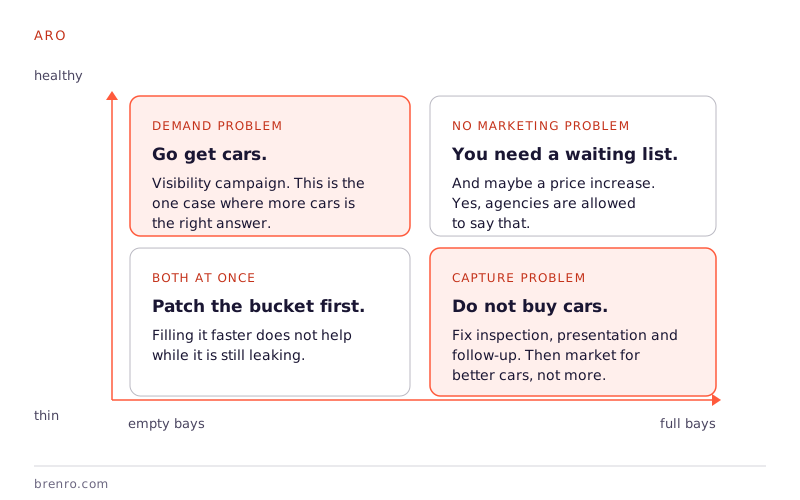
Any agency that doesn't ask for these numbers before quoting you is selling you their product, not solving your problem.
The uncomfortable truth about generic SEO agencies pitching repair shops from three states away is that they don't know what an ARO is, they've never heard a service advisor present a brake job, and every shop gets the same playbook. The numbers on your P&L should write the playbook. That's the whole point of working with someone who's been around the industry instead of around a spreadsheet.
Questions shop owners ask us about this
How do I increase car count at my shop? First make sure car count is the real problem: open bays and techs waiting on work, not full bays with thin tickets. Then start with what's cheap and close. Fix your Google Business Profile, ask for reviews every day, follow up on declined work and lapsed customers, and turn on service reminders. Fleet accounts and seasonal content come next, and paid ads after that.
What's a "good" ARO? It depends heavily on your mix and your market: a Euro specialist and a general repair shop live in different worlds. Compare yourself against your own history and against shops doing similar work near you, not a headline number from somewhere else. If your tickets trail theirs and your bays are full, there's almost certainly recoverable money in your process before there's money in more marketing.
Can marketing really raise ARO, or is that all in-shop process? Both. Process does the heavy lifting, but marketing controls who shows up. Content and offers that attract diagnostic, AC, and driveability work pull a structurally higher ticket than coupon traffic. Positioning is an ARO tool.
I'm slammed in season and dead in summer. Which problem is that? That's a seasonal demand problem, and it's very Coachella Valley. The play is usually fleet and commercial accounts to flatten the curve, fleets don't leave in June, plus summer-specific demand capture like AC and cooling-system content that meets the heat head-on.
What numbers should I have ready before talking to any marketing company? Weekly car count, ARO, number of techs and bays, your work mix, and roughly where new customers come from now. If an agency doesn't ask for them, that tells you something too.